Case Study
3 Apr 2026
Why Ecommerce SEO Compounds While Paid Ads Stop the Moment You Do
Paid ads are reliable. Turn them on, get traffic. Turn them off, traffic stops. For most ecommerce stores, that's the entire growth model — and it works, until ad costs rise, ROAS drops, or a platform changes its algorithm overnight.
Here it is:
Why Ecommerce SEO Compounds While Paid Ads Stop the Moment You Do
Category: SEO | Read time: 5 min
Paid ads are reliable. Turn them on, get traffic. Turn them off, traffic stops. For most ecommerce stores, that's the entire growth model — and it works, until ad costs rise, ROAS drops, or a platform changes its algorithm overnight.
Ecommerce SEO works differently. It builds an asset. Rankings earned this month are still driving revenue next year. The traffic doesn't disappear when you stop paying for it. And when it's done alongside paid media, the two channels reinforce each other in ways that compound over time.
Here's what that looks like in practice, using real results from across the industry.
1. Ranking for the wrong keywords — traffic up 300%, revenue up 10%
This one is worth starting with because it's the most common SEO failure mode for ecommerce stores.
One ecommerce brand had seen traffic increase over 300% but revenue grow only 10%. The diagnosis: they were ranking almost entirely for informational keywords — people researching, not buying. Once the strategy shifted to commercial and transactional keywords, organic revenue grew 61% year-on-year within four months. Noah Kain Consulting
Traffic without intent is just vanity. Ecommerce SEO needs to prioritise keywords that signal purchase intent — product terms, category terms, comparison searches. That's what drives revenue, not page views.
Note: Results are specific to this client. Actual performance will vary.
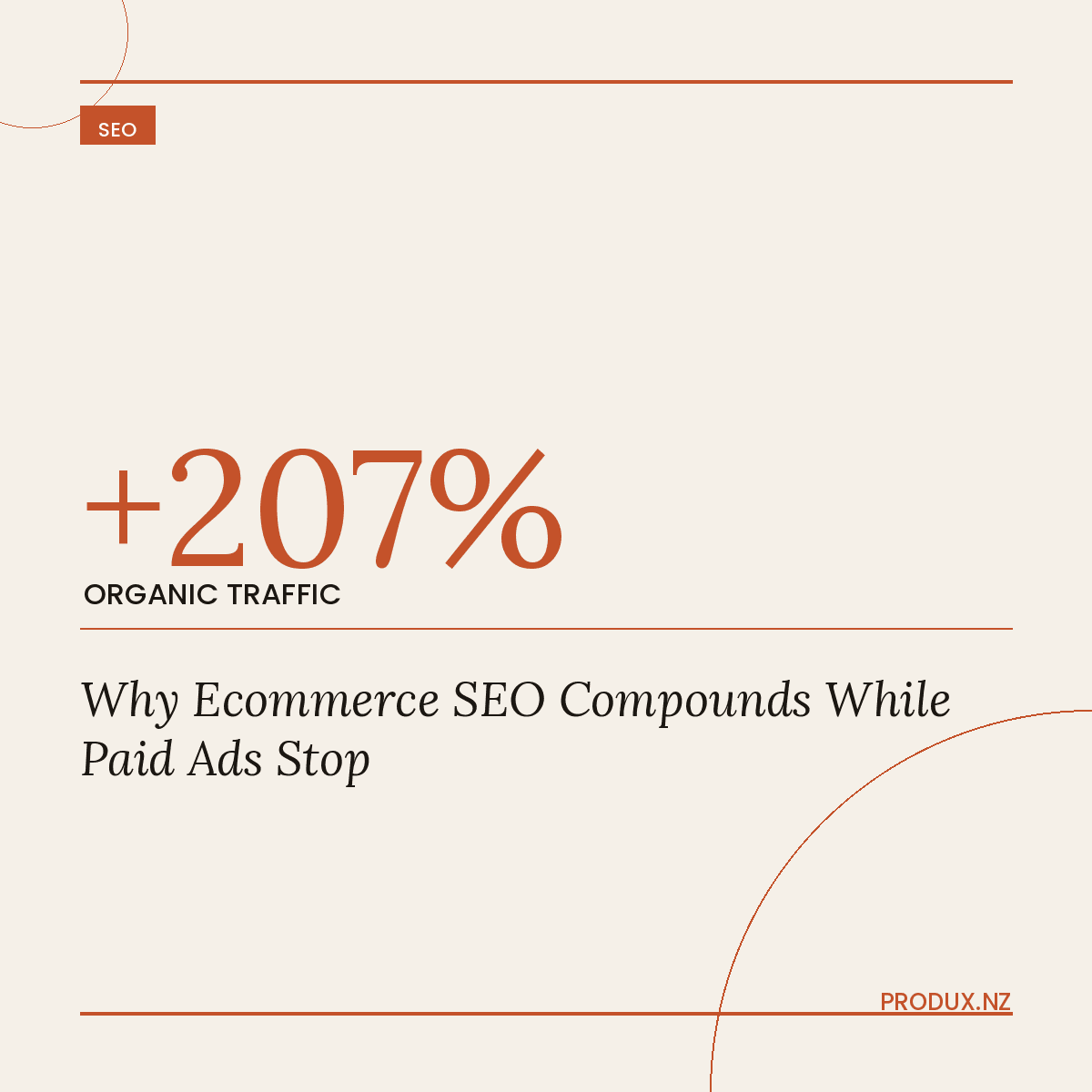
2. Technical SEO and content strategy — 207% traffic increase, 88% revenue growth in 6 months
A home sauna brand was stuck relying on paid ads while competitors dominated organic search for their core terms. They had the products. They didn't have the visibility.
After a full technical audit and structured content strategy, monthly organic clicks grew from 5,594 to 17,219 in six months — a 207% increase. Monthly organic revenue grew from $72,194 to $135,173, an 88% lift. Inbound Pursuit
The audit surfaced issues most store owners never see: paginated category pages indexed in Google, thin product content, and keyword cannibalisation across similar pages. Fixing the foundation first is what made the content strategy work.
This is the sequencing we follow with every SEO engagement — fix technical issues, then build content, then build authority.
Note: Results are specific to this client. Actual performance will vary.
3. Competing against major brands — 369% increase in organic revenue
A UK furniture retailer was getting buried in search results dominated by IKEA, John Lewis, and Argos. Broad keywords were out of reach. The strategy shifted to fixing on-page issues, targeting long-tail transactional terms, and building a credible link profile.
The result was a 369% increase in organic revenue — competing directly against major international brand names. SearchLogistics
This is the most underappreciated aspect of ecommerce SEO for smaller NZ and Australian brands: you don't need to win on broad terms to win on revenue. Long-tail, high-intent keywords often convert better and face less competition. They're also where SEO and CRO intersect — traffic with clear purchase intent landing on a well-optimised product page is your highest-converting combination.
Note: Results are specific to this client. Actual performance will vary.
4. Starting from scratch — 3,403% keyword growth, best sales year on record
An ecommerce store starting from 157 keyword rankings and virtually no organic traffic grew to nearly 5,500 keyword rankings — a 3,403% increase — with organic traffic climbing from 30 to over 200 clicks per day. The business recorded its best sales year ever. Surfer
The work involved no shortcuts: structured content strategy, consistent publishing, and proper on-page optimisation. SEO from a low base moves fast when the fundamentals are done right. The compounding effect kicks in as authority builds.
Note: Results are specific to this client. Actual performance will vary.
5. Organic as an ad cost reducer
One result from the keyword-intent case study above is easy to overlook: once organic revenue improved, the brand became less reliant on ad spend and was able to move newly stocked products faster than before. Noah Kain Consulting
This is the long-term play for ecommerce. Strong SEO reduces your dependence on Google Ads and paid social to maintain revenue. You still run paid — but from a position of strength rather than dependency.
The common thread
Every one of these started with an audit. Technical issues cleaned up, keyword strategy reset to transactional intent, content built around what buyers actually search for. None of it is complicated in principle — but it does need to be done in the right order.
That's what a proper ecommerce SEO strategy looks like. Not just publishing blog posts and hoping for the best.
Want to know where your organic search is leaving money on the table?
Our free SEO audit covers technical health, keyword gaps, and on-page issues — so you have a clear picture of what to fix before investing in content or link building.